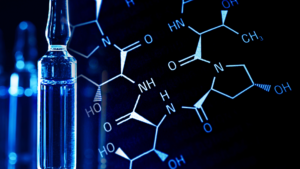
Peptide-based biomaterials have gained significant attention in recent years due to their biocompatibility, tunability, and ability to mimic natural biological structures. Among these, peptide hydrogels and scaffolds are particularly important in tissue engineering, regenerative medicine, and drug delivery. These materials are formed through the self-assembly of peptides into organized structures, creating environments that support cell growth and tissue repair.
What Are Peptide-Based Biomaterials?
Peptide-based biomaterials are materials constructed from short chains of amino acids designed to form functional structures. Depending on their sequence and environmental conditions, peptides can self-assemble into fibers, networks, or gels.
- Hydrogels are water-rich, three-dimensional networks capable of retaining large amounts of water while maintaining structural integrity.
- Scaffolds are solid or semi-solid structures that provide physical support for cells to attach, grow, and form new tissues.
Both systems aim to replicate aspects of the extracellular matrix (ECM), the natural environment surrounding cells in the body.
Formation and Self-Assembly
A key feature of peptide-based biomaterials is their ability to self-assemble through non-covalent interactions such as hydrogen bonding, electrostatic forces, and hydrophobic interactions. By carefully designing peptide sequences, researchers can control:
- Mechanical strength
- Porosity and structure
- Responsiveness to stimuli (pH, temperature, enzymes)
This level of control allows for the creation of materials tailored to specific biomedical applications.
Applications
1. Tissue Engineering
Peptide scaffolds provide a supportive framework for cell attachment and proliferation. They are used in regenerating tissues such as skin, bone, cartilage, and nerve tissue.
2. Drug Delivery Systems
Hydrogels can encapsulate drugs and release them in a controlled manner. Their responsiveness to environmental triggers enables targeted and sustained delivery.
3. Wound Healing
Peptide hydrogels can promote faster healing by maintaining a moist environment and supporting cell migration and tissue regeneration.
4. 3D Cell Culture
These biomaterials are widely used in laboratory settings to grow cells in three dimensions, offering more realistic models compared to traditional 2D cultures.
Advantages
- Biocompatibility: Peptides are generally non-toxic and well-tolerated by the body
- Biodegradability: They break down into natural amino acids
- Design Flexibility: Sequences can be engineered for specific properties
- Mimicry of Natural Tissue: Closely resemble the extracellular matrix
- Injectability (for hydrogels): Can be delivered minimally invasively
Challenges and Limitations
- Mechanical Weakness: Some peptide hydrogels lack sufficient strength for load-bearing applications
- Stability Issues: Susceptible to enzymatic degradation
- Cost: Peptide synthesis can be expensive
- Scalability: Large-scale production remains challenging
Future Perspectives
Advances in peptide engineering, nanotechnology, and material science are enhancing the performance of these biomaterials. Hybrid systems combining peptides with polymers or nanoparticles are being developed to improve strength and functionality. Smart biomaterials that respond to biological signals are also emerging, opening new possibilities in personalized medicine.
Conclusion
Peptide-based biomaterials, particularly hydrogels and scaffolds, represent a powerful and versatile platform in biomedical science. Their ability to mimic natural tissue environments and be precisely engineered makes them ideal for applications in tissue regeneration, drug delivery, and beyond. Continued research will further expand their capabilities and accelerate their translation into clinical practice.